


Transfer the setting
Two Scales For Two Joint Types
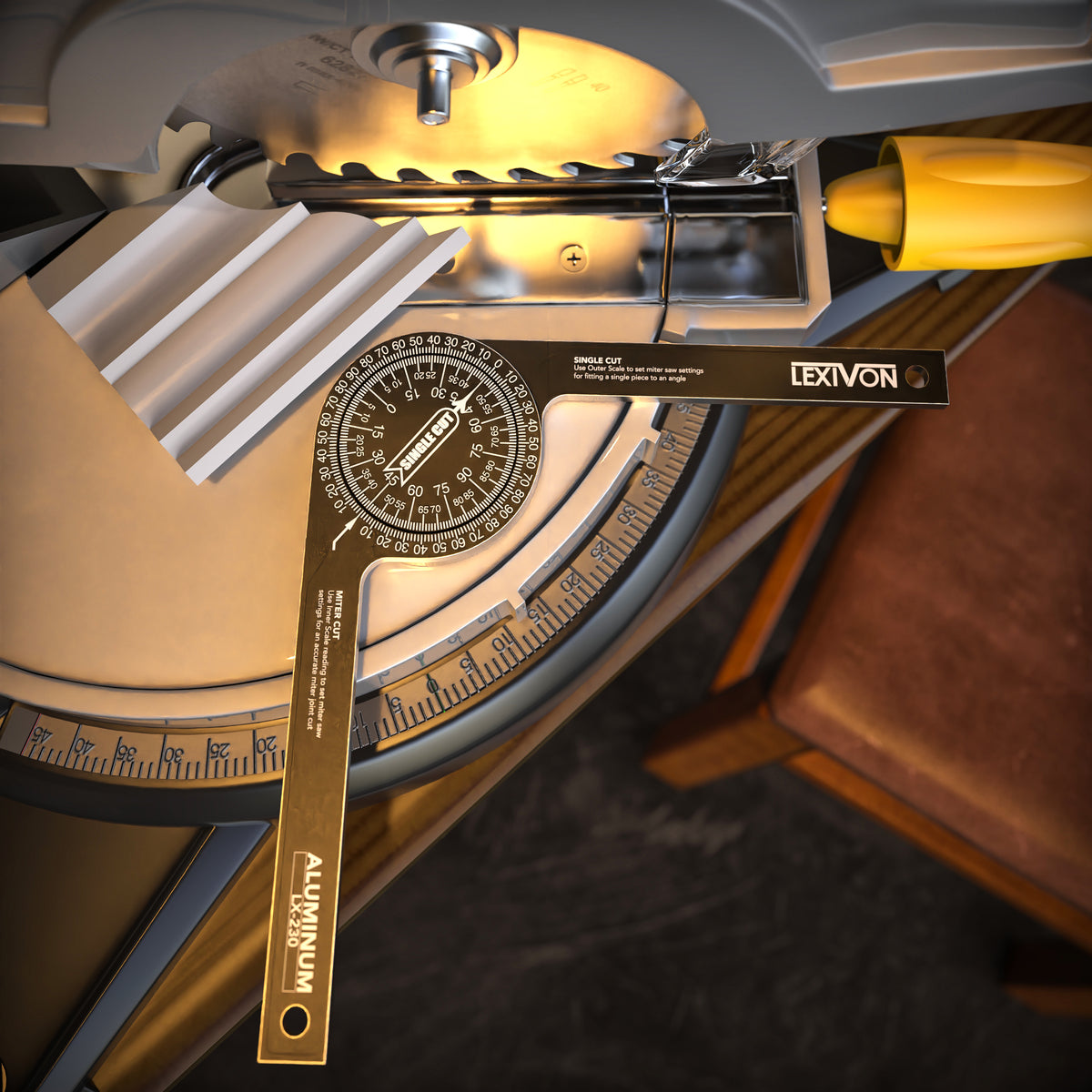
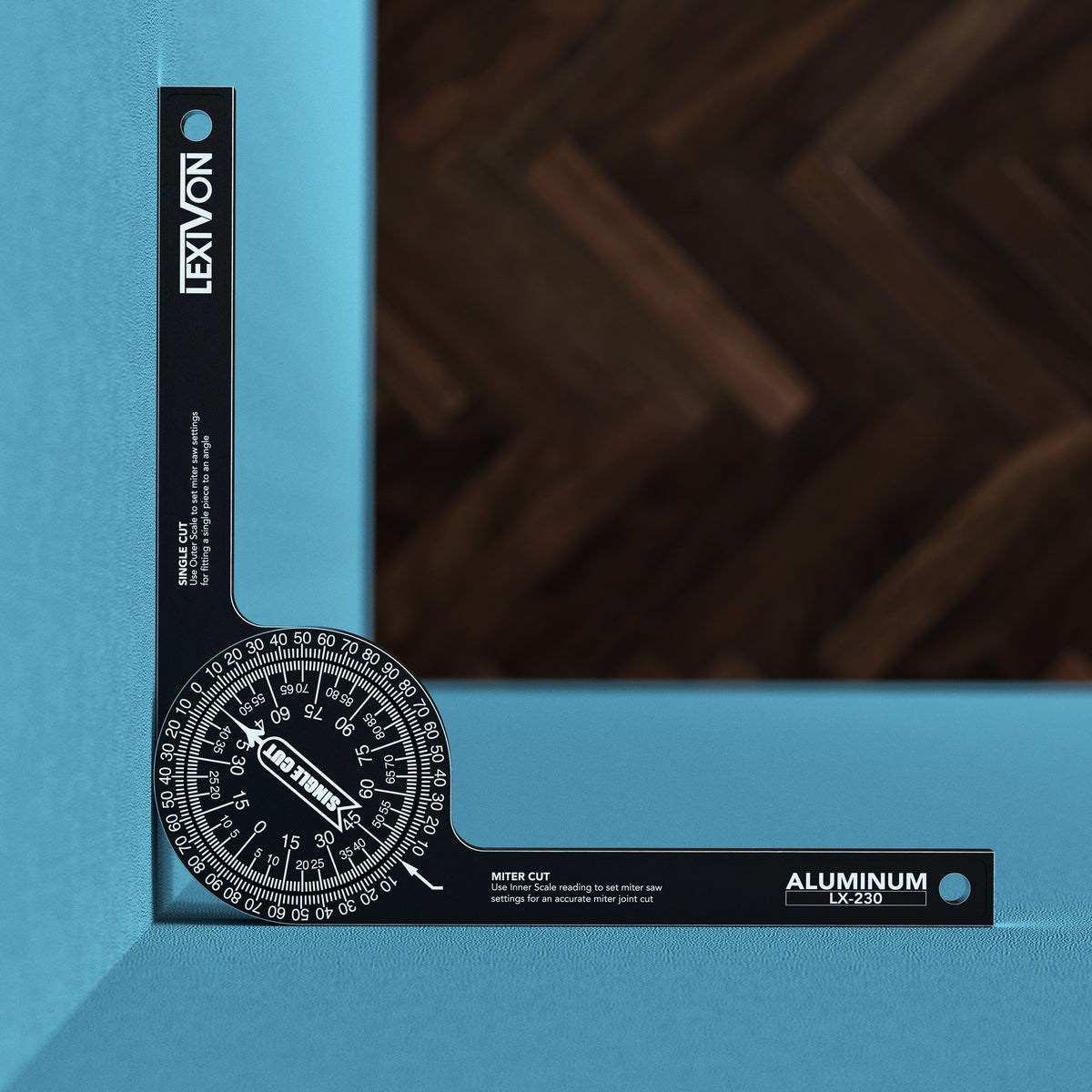
2 tools supplied. Use the inner miter-cut scale for miter joints and the outer single-cut scale for butt joints. Transfer the indicated setting to your saw, then check it on scrap.


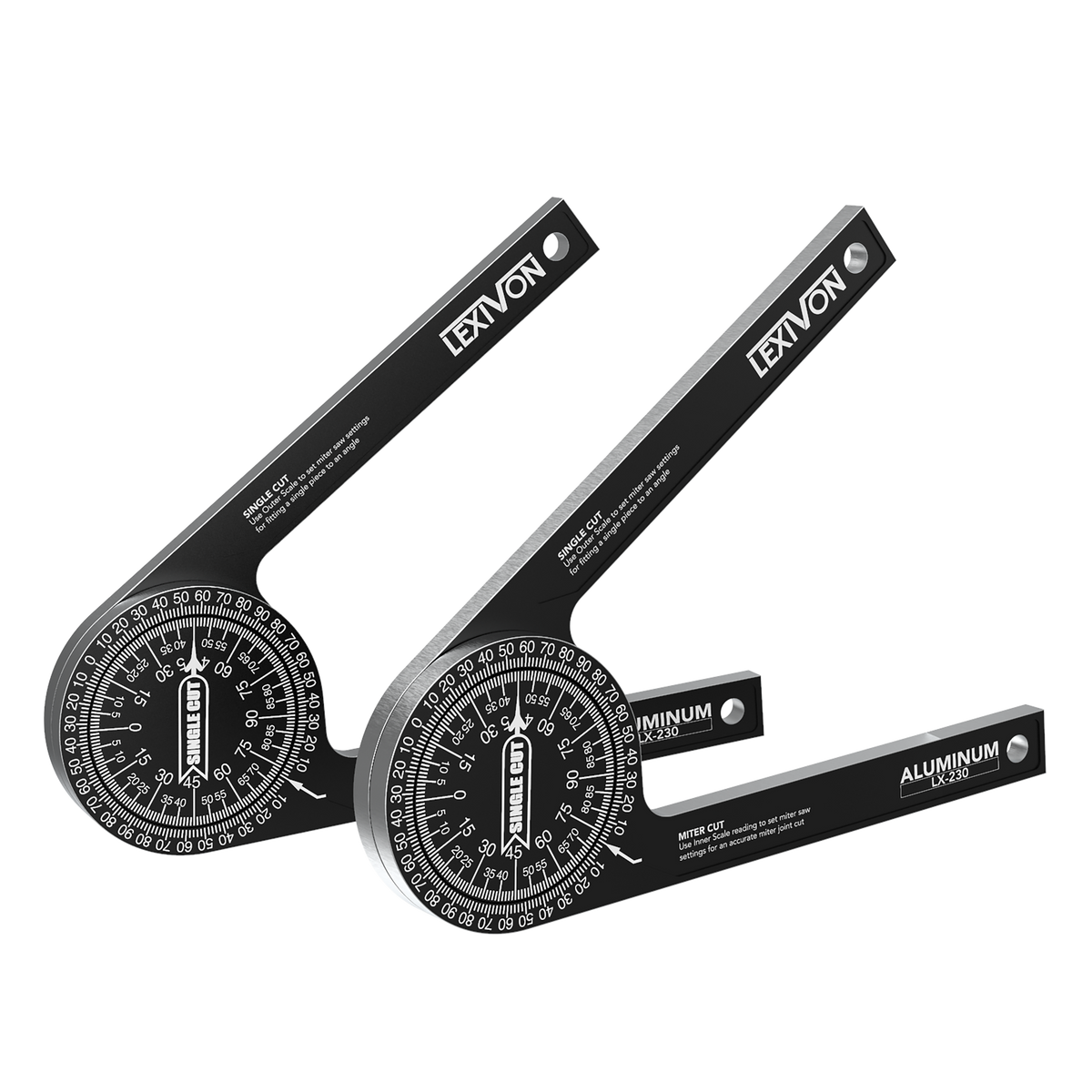
LEXIVON [2-pack] Aluminum Miter Saw Protractor | 7-Inch Rust Proof Angle Finder Featuring Precision Laser Engraved Scales (LX-230X2)
LX-230X2 contains 2 7-inch aluminum miter saw protractors. Its engraved single-cut and miter-cut scales provide different readings for butt joints and miter joints.
2 tools supplied. Use the inner miter-cut scale for miter joints and the outer single-cut scale for butt joints. Transfer the indicated setting to your saw, then check it on scrap.
The guide includes flat crown-molding layouts for single- and double-bevel saws and compound tables for 38-degree and 45-degree crown spring angles.
2 7-inch aluminum miter saw protractors. Use the crown-molding guide for compound cuts.
Choose the scale for the joint and check the molding spring angle for compound cuts. Test settings on scrap before cutting the workpiece.
| Job or requirement | Works | What to check |
|---|---|---|
| Inside corners | Yes | Seat both arms against the surfaces and use the scale for the joint. |
| Outside corners | Yes | Match arm contact and the appropriate cut scale. |
| Miter joints | Yes | Use the inner miter-cut scale and transfer the indicated saw setting. |
| Butt joints | Yes | Use the outer single-cut scale. |
| 38-degree or 45-degree crown | Yes, with guide | Match spring angle, single- or double-bevel layout and inside or outside corner. |
| Other crown spring angles | No matching table | Obtain a verified setup for that profile; do not substitute the wrong spring-angle table. |
Yes. Open the arms against the two surfaces, then read the scale matching the joint you plan to cut.
Yes. Place the arms against the outside corner surfaces; transfer the reading appropriate to the joint and test on scrap.
Yes. The inner miter-cut scale transfers the indicated setting to the miter saw for miter joints.
Yes. Use the outer single-cut scale for a single piece fitting to an angle or a butt joint.
Yes. It explains crown spring-angle selection, flat molding layouts and compound-cut tables for 38-degree and 45-degree crown.
No. The tables shown cover 38-degree and 45-degree spring angles. Other profiles require their own verified setup.
The inner scale, indicated by the handle arrow, is the miter-cut scale for miter joints.
The outer scale is the single-cut scale for a single piece fitting to an angle and for butt joints.
A friction system and internal O-ring mechanism help retain the arm position during transfer; check the contact and setting before cutting.
It has laser-engraved scales on anodized aluminum.
No numerical angle tolerance is confirmed. Engraved markings alone do not establish a quantified accuracy.
Yes. The compound table supplies miter and bevel values for the matching crown spring angle. Follow the layout for your saw type.
LX-230X2 supplies 2 protractors; LX-230 supplies one. Both use the same 7-inch aluminum tool and engraved cut scales.
No. Its engraved scales and pivoting arms provide mechanical readings; it needs no battery or digital display.
2 7-inch aluminum miter saw protractors. Use the crown-molding guide for compound cuts.
Yes. This pack supplies 2 copies of the same LX-230 protractor.
It is a 7-inch protractor made from CNC-machined anodized aluminum, 1/4 inch thick.
Lifetime coverage when you register online within 90 days of purchase; 12 months standard without registration. Coverage is for defects only; commercial use has 12 months without extension, and industrial use is not covered.
Place each arm against one corner surface, hold that position and read the single-cut or miter-cut scale for the joint. Test the transferred setting on scrap.
Identify the molding's 38-degree or 45-degree spring angle, take the corner reading as described, then use that spring-angle column for miter and bevel settings.
Follow the layout for your saw type. The guide has separate instructions for single- and double-bevel saws, including molding orientation and inside or outside corner.
No. Test all settings on scrap molding first.
Stop relying on a distorted arm or unreadable scale and contact Lexivon for guidance. Ask Lexivon about repair or accuracy checks before using it again.
No. Lifetime eligibility does not remove exclusions for normal wear, misuse, accidents, modifications and damage from non-original parts. Covered-defect resolution remains at Lexivon's discretion and coverage is not transferable.